Field: Climate Crisis

Why pumping water back into hydro dams beats batteries for renewable power
The U.S. has thousands of reservoirs that could be paired for pumped hydro storage without the need for rivers.

Scientists propose mechanical trees to soak up CO2
Can we combine our two best ways to remove CO2 from the air?
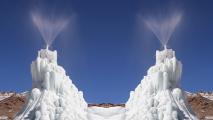
Chile is making its own glaciers
Chilean climate experts will attempt to DIY their own glaciers in 2022, in hopes of supplying fresh water through the dry summer months.

Clay from kitty litter pulls methane emissions from air
A new technology for reducing methane emissions in the atmosphere relies on zeolite, a cheap, abundant clay found in cat litter.

Series|
Just Might Work
Tornado Alley miracle: A 100% accurate tornado sensor invented by accident
Can this recycled technology save the citizens of Tornado Alley?

Floating drones mine carbon data in the Gulf Stream
Saildrone has deployed three vessels into the Gulf Stream this winter to collect data on carbon uptake.

Citizen keepers are raising threatened grasshoppers
The large marsh grasshopper risks extinction. But volunteer citizen keepers are raising the insect for rewilding to newly restored wetlands.

Paris to make the Seine River swimmable for the Olympics
Paris’ plan to make its iconic Seine River swimmable for the 2024 Summer Olympics could help other cities clean up their own waterways.

The world’s first indoor saltwater farm
But Sam Norton, founder of Heron Farms, is using the world's most abundant resource — seawater — to grow sea beans.

Luminescent materials could cool our cities and light the streets
Luminescent materials could be used to cool our cities, and simultaneously cut down on electricity.

There's a ton of wind power in the deep sea. Let's go get it.
The most powerful winds can be found over the deep, open ocean. Floating wind turbines could tap into this and 100x our wind energy.

New tech “upcycles” junk plastic, reducing its carbon footprint
A chemicals and aircraft parts manufacturer has created a new method for converting low-grade plastic waste into oil, which they can turn into high-quality plastic.

Rock dust can turn farmland into a sponge for greenhouse gases
Spreading rock dust over large areas of farmland could cause the soil to absorb considerably more carbon from the air, while improving crop yields — a process called mineral weathering.

7 scientists we are thankful for this Thanksgiving
One of these scientists saved more lives than any other person in history.

The science of climate change in 6 charts
Here's what the science says about climate change — and a few reasons to be optimistic.

Can CRISPR keep the beer flowing?
Researchers are turning to CRISPR to create barley better able to remain dormant in climate change — while being still ready to make beer.

Here’s what the world will look like 4°C warmer
This map, which shows some of the effects a 4°C rise in average temperature could have on the planet.

Students get $5 million from Elon Musk for carbon-removal ideas
An Elon Musk-funded XPrize competition has given teams of students $5 million to develop ideas for carbon removal systems.

AI reveals that the Sahara actually has 1.8 billion trees and shrubs
AI analysis of satellite images sees trees and shrubs where human eyes can't.

Moving endangered species could save them — or turn them into invasive species
As climate change destroys ecosystems, some scientists propose helping animals pack up their bags and move to more hospitable parts of the world. But helping animals migrate is a complicated and fraught task. Now, some scientists want to lay the ground rules for assisted colonization, before the animals become refugees.

We need to rethink global food production to have a shot at our climate goals
Emissions from food alone could use up all of our budget for 1.5°C or 2°C – but we have opportunities to avoid this.

Climate transparency is about to get real with this independent database
A new independent database uses satellite data and AI to track global greenhouse gas emissions in near real-time, boosting climate transparency.

Climate tech is booming — and this is better news than COP26
It’s estimated that 65% of emissions reductions can be achieved by existing technologies. The other 35% will need to come from tech breakthroughs.

The world will electrify. This technology can power our sustainable future.
In partnership with Turntide
Attacking climate change requires reimagining our buildings and vehicles as intelligent systems. And it all starts with a smart motor.

Using AI to help save wine from wildfires
California startup Tastry is using its wine “tasting” AI to help save wines impacted by wildfire smoke.

We could see planes fueled by captured CO2 in 2022
Dimensional Energy, a startup based in New York, plans to use this new environmentally friendly jet fuel to conduct flight tests by 2022.

A robot boat tows kelp forests and sequesters carbon
The startup, Phykos, has sent a prototype of a solar-powered watercraft on a carbon-sequestering cruise in the Pacific Ocean, using an innovative kelp forest.

This new concrete soaks up a greenhouse gas
Engineers in Japan have discovered a new method for making concrete by recycling concrete rubble — and combining it with carbon dioxide drawn from the atmosphere.

Can sponge cities help us prepare for more floods?
Deadly floods are expected to get worse over the next decade. One design solution for cities is to make them more porous — like a sponge.

How oyster reefs protect against hurricane damage
Coastal cities are turning to eco-engineering to protect their coastline from storm surges and hurricane damage. Their floodwater solution: building oyster reefs to act as a natural breakwater.

Study suggests preserving food using tech developed for organs
By preserving food with isochoric freezing, we could improve quality and decrease energy usage in the frozen food industry, say scientists.

Can the woolly mammoth save Siberia from climate change?
Harvard geneticist George Church’s new de-extinction startup aims to resurrect the woolly mammoth to help combat permafrost thaw.

Probiotics could help coral survive the changing climate
A new study has found that probiotics can help corals fight coral bleaching.

How artificial clouds could save the Great Barrier Reef
Scientists conducted the first “cloud brightening” field experiment to artificially thicken clouds with seawater mist, creating shade for the Great Barrier Reef

The world’s largest direct air capture plant just opened
A partnership between Climeworks and CarFix just started the largest direct air capture plant, storing carbon dioxide in solid form deep underground.

Saving the ozone layer avoided 2.5 degrees of global warming
A new study shows that banning CFCs in the 80s also protected the depleting ozone layer and reduced the rate of global warming.

Is it possible to flood-proof the subways?
In the wake of Hurricane Ida and the flooded New York City subway system, can we rebuild flood-proof subway tunnels?

How to slay a hurricane
Hurricanes are becoming more powerful — can scientists engineer a way to weaken them and save lives?

Using body bags to treat heatstroke
The Pacific Northwest heat wave crushed hospitals with heatstroke victims. Doctors turned to body bags to save lives.

Ancient frozen viruses hold clues to life and climate
Using new techniques, researchers at Ohio State have identified ancient viruses we’ve never seen before.

3D-printed bridge reduces use of "most destructive material on Earth"
Researchers have found a way to reduce the CO2 emissions of a concrete bridge: remove the reinforcement. And the results are stunning.

Watching the moon’s “wobble” may help prevent flooding on Earth
A new NASA study predicts record flooding in the 2030s due to a combination of rising sea levels and a “wobble” in the moon’s orbit around Earth.

Oxford study: Move copper mining to dormant volcanoes
A more sustainable approach to copper mining may be digging wells under dormant volcanoes to suck out the metal-containing fluids below them.

To find leaking methane, ready the satellites
Researchers are using methane-hunting satellites to sniff out the potent greenhouse gas, helping to reduce methane emissions.

Hippos in tracking study unexpectedly contract anthrax
A study into the movement of hippos led to new research on anthrax outbreaks when some of the animals wearing GPS trackers contracted the disease.

Green sand beaches could erase carbon emissions
By spreading green sand all over a Caribbean beach, Project Vesta hopes to pull tons of carbon dioxide out of the atmosphere and lock it away for eons.

How subterranean microbes are devouring carbon emissions
Researchers at Pellissippi State Community College found naturally occurring microbes deep in the Earth’s crust are helping soak up CO2.

This machine will make seashells out of CO2
Scientists are building a machine that will suck carbon dioxide out of the ocean and turn it into seashells.

Startup plans to remove 1 billion tons of CO2 from the air
A new carbon sequestration startup plans to remove one billion tons of excess carbon from the atmosphere by 2035 using enhanced mineral weathering.

The Maldives are constructing a floating city to combat rising sea levels
Government officials of the island nation, Maldives, debuted plans to build the world's first fully floating city.

Genes show which animals will adapt to climate change
Some fish, such as the threespine stickleback, can respond to dramatic seasonal changes very quickly — genome sequencing reveals why.

How wonky cell phone signals help track wildfire smoke
An atmospheric oddity called a temperature inversion helped researchers discover how mobile phone signals could show the amount of bushfire smoke suffocating towns and cities.

How balloons could soak up carbon and fight climate change
A new startup plans to strap direct air capture technology to balloons and float them into the atmosphere to collect and store carbon dioxide.

This laundry detergent is made from recycled carbon
Consumer goods company Unilever is now selling a laundry detergent that’s made using recycled carbon instead of traditional fossil fuels.

Look at how much the planet has changed in four decades with Google Earth Timelapse
The new Google Earth Timelapse feature lets us scan the globe and look back from the present day to 1984 to see how human action and natural forces have changed the planet since the 1980s.

Rare wild coffee species brews hope for coffee’s future
A rediscovered coffee plant that can flourish in warmer climates, according to scientists, may be the future of coffee production, helping future-proof the morning ritual against climate change.

Solar canals in CA could save 63 billion gallons of water a year
Researchers looked into what it would take to cover California’s canals with solar panels and found that the benefits of solar canals outweigh the costs.

Can seaweed save the planet?
A Maine startup is growing vast quantities of seaweed and then burying them at the bottom of the ocean to sequester carbon for carbon offsets.

How tech helped beat back locust swarms in East Africa
Billions of locusts descended on East Africa in 2020, where new technology helped stop their spread.

Autonomous trash-eating boats clean up water pollution
New designs in autonomous boats, and a trash wheel that intercepts drifting trash, act as on-the-water trash-eating machines.

The world's whitest paint can cool your house — and the Earth
The whitest white paint reflects up to 98.1% of sunlight, which could make it useful for cooling homes in place of energy-hogging air conditioners.

Can weather modification save us from megadroughts?
Scientists predict that the western U.S. is entering the most severe "megadrought" on record. One weather modification solution is cloud seeding.

Should we genetically engineer carbon-hungry trees?
Genetically modified trees that are designed to grow faster and store more carbon could help reverse climate change.

Elon Musk offers $100 million for direct carbon capture tech
A new Xprize competition funded by Elon Musk offers $100 million in prizes for scalable direct carbon capture technology.

New findings could help wine survive climate change
Climate change is altering wine making as we know it. Researchers at UC Davis have identified what makes some grapes more resistant to water stress.

Making it rain with “cloud seeding”
China is using cloud seeding to create rain where and when it’s needed. Will it try to use geoengineering to combat climate change next?

CRISPR could help save coral reefs from bleaching
Using CRISPR, scientists have identified a gene that could determine whether coral reefs are highly susceptible to bleaching or not.

We can grow 60% more food by hacking photosynthesis
By improving photosynthesis, we can get more food from our farmland.

This Canadian startup wants to make our buildings out of CO2
Carbon capture technology is here, but how do we make it feasible?

“Digital Earth” can simulate climate change down to the kilometer
Europe’s ambitious Destination Earth project aims to simulate climate systems — and human impact — to the kilometer.

Predator drones are using AI to create faster fire maps
The National Guard has used drones to create forest fire maps since 2017. New AI upgrades could make the maps in minutes, not hours.

Can trillions of reflective glass beads save arctic sea ice?
Arctic sea ice is more than majestic; it also reflects the sun’s rays. But young, thin ice melts fast. Can silica powder reflect enough sun to help it survive?

Doctors fighting deadly climate change
In partnership with Skoll Foundation
These doctors are coming together to address their collective carbon footprint, explore new solutions, and improve sustainability in healthcare.

Cooling the planet with a giant solar umbrella
Solar geoengineering would cool global temperatures — is it worth it?

Could a Norwegian “hurricane net” stop storms by cooling the sea?
Norwegian company OceanTherm uses bubble nets to keep ice out of fjords. Could a hurricane net weaken the storms?

Raising Pacific islands to save them from high sea levels
The president of Kiribati announced a new plan to fight against sea level rise: raise the islands.

Fertilizer feeds half the world. Can we make it without fossil fuels?
Fertilizer is needed to feed the world, but its production comes with a carbon footprint. This solar-powered strategy may reduce that.

Sending heat to space to reverse global warming
This high-tech material could reverse global warming by using radiative cooling to lower the Earth’s rising temperature.

A new approach to green building could reverse climate change
The building sector is one of the biggest contributors of greenhouse gas emissions. But new research suggests that trend could stop, and even reverse because of a new type of green building.

The hidden history in the Notre Dame attic
Studying the scarce, centuries-old logs that remain from the Notre Dame attic will help scientists reconstruct medieval climate data to see if temperatures were ever this high.

Open-sourcing the blueprints for a nuclear power plant
The Energy Impact Center has open-sourced nuclear power plant blueprints in an attempt to encourage the adoption of eco-friendly nuclear energy.

Changing flight altitudes could help minimize contrails
A study found that flying a small percentage of planes at slightly different altitudes could significantly decrease contrails, a global warming contributor.

Series|
Guardians of the Apocalypse
Geoengineering: Our last defense against climate change
Reflecting the sun’s rays is a proposed last-ditch effort to mitigate the effects of global warming. This Harvard research team is trying to better understand the potential risks in order to save the planet.

Modifying poplar tree genes to fight pollution
The number of poplar trees around the world has doubled, but a chemical compound in their leaves means they might be doing more harm than good.

The robot racing to study Antarctica’s massive ice melt
Icefin, a semi-autonomous research vessel, is on a mission to search for clues about one of the continent’s fastest melting glaciers, the Thwaites Glacier.

Tree-planting drones restore charred forests
This Seattle startup is bringing new life to charred forests by releasing swarms of smart, tree-planting drones equipped with seeds, mini seedbeds, and cameras.

9 ways the 2010s decade changed the world
From Tinder to CRISPR, these are the top moments, movements, and ideas through which the 2010s decade shaped the world as we know it.

This big wave surfer is changing how we fight wildfires
Fire retardant spray contains toxins that are harmful to the environment and first responders, but Jeff Denholm is looking to change that.

Ship’s logbooks are the first records of climate change data
With the weather and ice data from old ship’s logs, Dr. Kevin Wood realized it was possible to reconstruct the history of sea ice in the Arctic to better understand climate change.

Sifting through sound: using soundscapes to understand ecosystem health
“Ecoacoustics” is an emerging field of research. Instead of chasing down isolated animal sounds, researchers are using all of the acoustic properties of a location to answer ecological questions.

Series|
Seachange
Carbon capture technology explained
Cutting-edge carbon capture technology is bringing the world’s top scientists and engineers one step closer to solving the climate change puzzle.

Series|
Seachange
The rural Mexican village planting 5 million trees
Reforestation projects could be just what we need to turn the tide of climate change, and this Mexican village is setting an example for all to follow.

Preparing for climate change
Climate change is increasingly reshaping our world, but communities across America aren’t losing hope — they’re taking action. Learn how 18 communities are using science to guide community-based decision-making.

Researchers found a species of stony coral ready to withstand climate change
At current trends, more than 90% of the world’s coral reefs will be massively degraded by 2050. Researchers have found a species of stoney coral that has sparked new efforts for coral reef restoration.

Series|
Seachange
How to save the coral reefs
Coral reefs are the foundation of ocean life, and yet 50% of them have been lost. Here’s why coral reefs are dying and what one group is doing to stop it.

A community at the frontlines of the war on wildfire
When facing literal hellfire, this community effort may be the only way to protect homes and lives from devastating wildfires.

Hacking surfboard fins to fight climate change
How can a surfboard modification help save the oceans?

Supercharging photosynthesis can grow 40% more food
We need a lot more calories to feed a growing world, and these scientists may have figured out how to get them.

The cost of sucking carbon out of the air just fell by 85%
It's not there yet, but carbon capture just got interesting.

Organic solar is (finally) efficient enough to compete
Reliable power straight from the sun looks more achievable than ever.